Keto Not Working? Unmasking the 7 Deceptive Lies Sabotaging Your Success
You start keto full of hope. You expect quick weight loss and steady energy. But weeks in, the scale stalls. Your energy dips. Why keto not working hits so many people. The diet itself works when done right. The issue comes from wrong ideas that block your progress.
FOOD EDUCATION
R Mungal
5/14/20266 min read
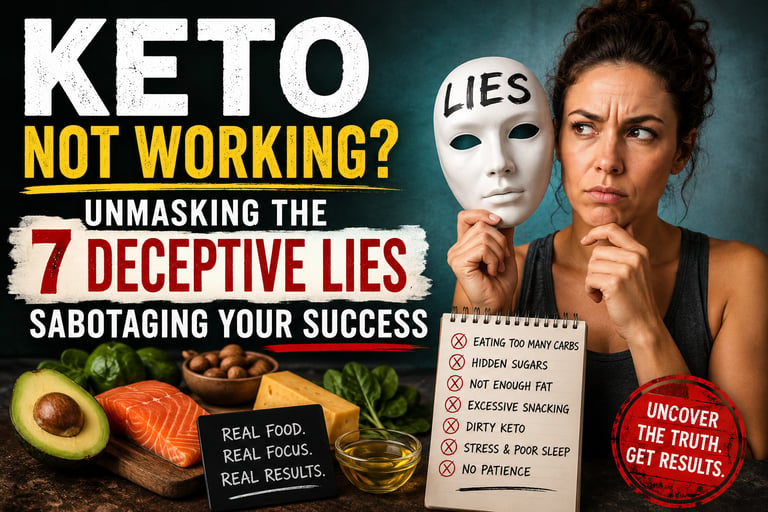
This article cuts through the noise. It looks at seven big lies about keto. These myths stop ketosis and fat loss. You will get clear facts here. You will find steps to fix your plan. Get ready to restart your keto success.
Lie #1: "As Long As It's Low Carb, It's Keto-Friendly"
Many pick foods just because they have few carbs. That choice misses the point. Keto needs quality carbs, not just low ones. Hidden carbs keep your insulin up. They block deep ketosis. You stay in a half-state that stalls fat burn.
Poor food picks add up. They lead to extra calories too. Your body fights to adapt when you eat junk labeled "keto." Switch to clean eats. That change sparks real results.
The Hidden Sugar Bombs in "Keto" Snacks and Processed Foods"
Packaged keto bars sound good. But they pack sugar alcohols like maltitol. These can raise your blood sugar. Some people feel a spike right after. Artificial sweeteners like sucralose do the same for sensitive folks.
Check every label. Look for stabilizers and fillers. They hide carbs that add up fast. Stick to whole foods. Nuts and berries beat fake snacks every time.
One study from the Journal of Nutrition notes sugar alcohols affect gut health. They can slow digestion. That leads to bloating, not fat loss. Ditch the processed stuff. Your body will thank you.
The Dairy Dilemma: Too Much Cheese and Cream
Cheese and cream fit keto macros. But too much packs calories. You end up overeating without noticing. Dairy has lactose. Even small amounts trigger insulin in some.
High-fat dairy slows fat adaptation. Your body clings to old fuel sources. Limit to a few ounces a day. Use it as flavor, not the main meal.
Go for full-fat but measure portions. Greek yogurt works if plain. Add herbs for taste. This keeps calories in check while you stay low carb.
Vegetable Overload: Ignoring Net Carb Counts
All veggies seem safe on keto. But starchy ones like sweet potatoes count. A large serving hits 20 grams of net carbs easy. Carrots in big bowls do the same.
Net carbs matter. Subtract fiber from total carbs. Still, watch portions. Eat leafy greens instead. Spinach and kale fill you up with few carbs.
Track your daily total. Aim under 50 grams net. That keeps ketosis strong. You avoid the overload trap.
Lie #2: You Must Eat Extreme Amounts of Fat for Ketosis
Fat seems king on keto. People load up to hit macros. But excess fat means too many calories. You gain weight even in ketosis. Fat loss needs balance, not overload.
Your body burns what you give it first. Extra dietary fat stops it from using stored fat. Cut back once adapted. Focus on moderate fats from good sources.
This lie comes from early keto books. They pushed high fat for all. Times change. Science shows calories count too.
Calories Still Matter: Understanding Your Energy Deficit
Keto changes fuel sources. But energy balance rules weight loss. Burn more than you eat. That creates a deficit. Keto helps by cutting hunger.
Track intake for a week. Use an app like MyFitnessPal. Aim for 500 calories below maintenance. You drop about a pound a week.
Protein and veggies fill the plate first. Fats come last. This way, you stay full without surplus.
Fat Adaptation vs. Fat Loading: Differentiating the Goals
At the start, you need fat to shift to ketones. Your body learns the new way. Once adapted, it burns body fat. No need to force more in.
Adaptation takes two to four weeks. Signs include steady energy and less hunger. Then, eat to satiety. Let your body pull from stores.
Test with a ketone meter. Levels above 0.5 mmol/L show you're there. Drop the loading act.
The Myth of "Keto Flu" Caused by Low Fat Intake"
Keto flu hits newbies hard. Headaches and fatigue come on. People blame low fat. Truth is, it's electrolyte loss.
Up your salt, not butter. Sodium drops on low carb. That causes the symptoms.
Drink broth or add sea salt to meals. You fix it fast. Fat won't cure the flu.
Lie #3: "If You Eat Protein Above 20%, Ketosis Stops"
Protein fears run deep in keto circles. Folks cut it to stay in ketosis. But low protein hurts muscle. It slows metabolism over time.
Gluconeogenesis gets blamed wrong. Your body makes glucose from protein only when needed. Eating steak won't kick you out.
Adequate protein keeps you strong. It fights hunger too. Don't fear it.
Understanding Gluconeogenesis (GNG) vs. Dietary Protein Intake"
GNG happens when glucose runs low. The body uses lactate or glycerol first. Dietary protein plays a small role.
Your liver controls it tight. Extra protein gets used for repair. Not all turns to sugar.
Relax on the 20% rule. Eat based on your needs. Sedentary? Aim 0.8 grams per pound body weight.
The Importance of Adequate Protein for Satiety and Muscle Preservation"
Protein fills you up. It signals fullness to the brain. Low intake leads to cheats.
During weight loss, muscle matters. Protein preserves it. You keep your shape.
Include eggs, fish, and meat daily. A chicken breast at lunch hits the spot. Feel the difference in energy.
When GNG Becomes a Concern (Endurance Athletes vs. Sedentary Individuals)"
Runners or cyclists watch protein close. Long sessions deplete stores. GNG ramps up then.
Desk workers have room. Excess protein just builds tissue. No big worry.
Know your activity. Adjust macros. Most do fine at 25% protein.
Lie #4: "You Must Be In Ketosis to Lose Weight on Keto"
Ketone strips rule for some. No reading, no progress. But weight loss happens outside deep ketosis.
Low carb lowers insulin. That unlocks fat stores. You burn them even at low ketones.
Focus on how you feel. Steady weight drop proves it works.
The Difference Between Nutritional Ketosis and Therapeutic Ketosis
Nutritional ketosis is mild. 0.5 to 3 mmol/L ketones. It aids weight loss.
Therapeutic needs deeper levels. For epilepsy or cancer. Most don't require that.
Stick to basics. Low carb gets you there.
Focusing on Insulin Sensitivity Over Blood Ketones"
Insulin blocks fat burn. Keto cuts spikes. Sensitivity improves fast.
Measure waist size. It drops as insulin works better. Ketones are just one sign.
Eat whole foods. Avoid spikes. See the scale move.
Why You Might Be "Keto-Adapted" Without Peeing Strips Lighting Up"
Strips catch overflow ketones. Adapted bodies use them quick. No excess to pee.
One person lost 20 pounds. No strip color. But energy soared. Blood tests showed adaptation.
Trust your body. Not the tool. Progress shows in real ways.
Lie #5: "Electrolytes Are Optional (Unless You Get the Flu)"
Electrolytes seem extra. But they keep you going on keto. Low levels cause crashes.
Water pulls from cells early on. Minerals follow. You feel off without them.
Fix this daily. Not just when sick. Your keto flows smooth.
Sodium: The Key to Quashing Water Retention and Hunger Signals"
Keto acts like a diuretic. You lose sodium fast. That swells tissues. Hunger kicks in too.
Aim for 4,000 to 5,000 mg a day. Salt your food. Drink bone broth.
Bloating fades. You stay motivated.
Potassium and Magnesium: The Silent Partners in Muscle Function and Sleep"
Low potassium cramps legs. Magnesium steals sleep. Both hurt adaptation.
Get 3,000 to 4,700 mg potassium. Avocados and spinach help. Magnesium from nuts, 300 to 400 mg.
Rest better. Cramp less. Keto feels easy.
Poor Hydration Mimicking Hunger or Failure to Adapt"
Dehydration tricks you. Thirst feels like snack need. Energy lags too.
Drink half your weight in ounces. Add electrolytes. Clear head follows.
Stay wet. Adaptation speeds up.
Lie #6: "Cheat Meals Are Fine Because They 'Kick You Out and Back In'"
Cheats seem harmless. One pizza restarts metabolism, right? Wrong. They spike insulin hard.
Recovery takes days. Fat burn stops. Cravings return strong.
Plan better. Skip the trap.
The Insulin Shockwave: How a Single High-Carb Meal Derails Days of Progress"
Carbs flood blood sugar. Insulin surges. It stores fat quick.
Lipolysis halts for 48 hours. You undo a week's work.
Stick to keto. Steady wins.
Re-sensitizing the Cravings Cycle"
Sugar lights brain paths. One bite reopens them. Willpower weakens next week.
Build new habits. Weeks carb-free dull the urge.
Stay clean. Cravings fade.
Refeeds vs. Cheat Meals: When Strategic Carbohydrates Are Appropriate"
Refeeds use sweet potatoes. Controlled for athletes. They refill glycogen.
Cheats mean junk. No control. Save refeeds for pros.
Most skip both. Pure keto works.
Lie #7: "Keto Must Be Followed 100% of the Time Forever"
Strict keto burns you out. Perfection stress leads to quits. Life needs flex.
Find balance. 80/20 works long term. Health stays.
Ease up after goals. You keep wins.
The All-or-Nothing Mentality Leading to Burnout"
One slip feels like failure. You binge then quit. Mind games hurt.
Forgive small errors. Get back fast. Progress builds.
Stay kind to yourself. Keto lasts.
Finding Your Sustainable Low-Carb Threshold (The 80/20 Rule)"
Test carb limits. 50 grams for some. 100 for others.
80% strict, 20% flex. Insulin stays low.
Tune it. Feel best.
Transitioning to Maintenance: Long-Term Metabolic Health"
Hit goal weight. Add complex carbs slow. Oats or fruit.
Watch response. Adjust to hold loss.
Health improves. Keto base stays.
Conclusion: Realigning Your Keto Strategy for Guaranteed Results
Keto not working often ties to these lies. Fix them, and results come. The diet shines with right info.
Eat whole foods over processed.
Balance electrolytes every day.
Skip cheats for steady burn.
You have the tools now. Apply them. Watch your body change. Start today for lasting wins.
Learn more about what's holding you back from losing weight below.

KrazyaboutKeto
Follow us on Social Media for more information
© 2026. All rights reserved.